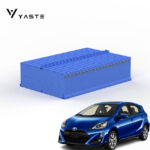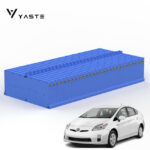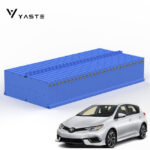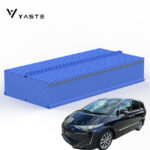

The P0A80 diagnostic trouble code is one of the most common and critical fault codes in hybrid vehicles, particularly Toyota Prius, Camry Hybrid, Lexus RX400h/450h, and other Toyota/Lexus hybrids. It directly indicates a performance degradation or internal failure of the hybrid battery pack. Addressing this code promptly is essential to restore fuel economy, power assist, and proper hybrid system operation.
1. Code Description
P0A80 – Replace Hybrid Battery Pack
This generic powertrain code (also manufacturer-specific for Toyota) sets when the hybrid vehicle control ECU detects an abnormal deterioration in the overall state of charge (SOC) balance or internal resistance within the hybrid battery (traction battery) modules. In simpler terms, the battery pack can no longer hold a consistent charge across all cells or modules, leading to poor performance or potential system shutdown.
2. Detection Conditions
The hybrid vehicle’s battery smart unit continuously monitors voltage, temperature, and current of individual battery modules (or cell blocks). The P0A80 code is triggered when the following conditions are met:
- Voltage imbalance: The voltage difference between the highest and lowest cell block exceeds a threshold (typically ~0.3V to 0.5V depending on model) under load or during charging/discharging cycles.
- Internal resistance anomaly: The battery control module detects an abnormal rise in internal resistance of one or more modules compared to the others.
- State of Charge (SOC) deviation: A persistent difference in SOC between modules, often detected during low-speed driving or after a full charge.
- Age/cycle count: While not a direct detection, the battery management system may track battery health parameters; after severe degradation, the code sets.
- Driving conditions: The fault is usually detected during normal driving, especially after a complete discharge/recharge cycle (e.g., highway driving followed by stop-and-go traffic). It may also appear immediately after a cold start or when the battery temperature is within normal range (0–50°C / 32–122°F).
3. Fault Areas (Affected Components)
When P0A80 appears, the problem may originate from several areas:
- Failed individual battery modules: One or more NiMH (or Li-ion) modules have significantly higher internal resistance or lower capacity than the rest, causing imbalance.
- Battery bus bars and connectors: Corroded or loose connections between modules can cause voltage drops and false imbalances.
- Battery control module (Battery ECU): Rarely, the module that monitors voltages and temperatures may be faulty, reporting incorrect data.
- Battery cooling system: Clogged cooling fan, duct, or air filter leads to excessive temperature variations, accelerating degradation and potentially triggering the code.
- Wiring harness: Damaged or oxidized wires from the battery ECU to the battery modules.
- HV (high-voltage) contactors or relays: Faulty contactors can disrupt voltage measurements, but this is less common.
4. Repair Procedures
Proper diagnosis and repair require high-voltage safety training and equipment. Below are standard steps for addressing P0A80:
Step 1 – Safety First
- Disable the high-voltage system by removing the HV service plug (safety plug) and waiting at least 10 minutes for the inverter capacitors to discharge.
- Wear insulated gloves and use insulated tools.
Step 2 – Scan and Verify
- Use a hybrid-compatible scan tool (e.g., Techstream, Autel, or Launch) to confirm P0A80. Check for related codes like P0A7F (Battery Pack Voltage Variation) or P0A81 (Battery Pack Current Sensor).
- Record freeze frame data (voltage of each battery block, current, temperature).
Step 3 – Perform Battery Health Test
- Measure the voltage of each battery module or cell block using a multimeter (or via scan tool live data). Compare the lowest and highest voltages under load (e.g., with the hybrid system ready and A/C on).
- A difference greater than 0.3V often indicates a weak module.
Step 4 – Inspect Auxiliary Components
- Check the battery cooling fan for operation, clean the fan filter and air intake.
- Examine all bus bars and connectors for corrosion or looseness. Clean and tighten as needed.
Step 5 – Replace Faulty Modules (Interim Fix)
- Identify the specific weak modules (typically 1–2 modules in a pack of 28–34 modules).
- Replace them with refurbished or new modules of matching capacity and internal resistance. This requires rebalancing the entire pack using a battery equalizer charger.
- Note: Module replacement is possible but not recommended by most manufacturers because remaining modules may soon fail. It can be cost-effective for older vehicles.
Step 6 – Complete Battery Pack Replacement (Recommended)
- Replace the entire hybrid battery pack with:
- New OEM battery (costly but reliable, often with extended warranty).
- Refurbished/remanufactured battery (lower cost, shorter warranty).
- Aftermarket enhanced battery (e.g., lithium upgrade for Prius).
- After installation, clear DTCs and perform a battery system learning (SOC initialization) using a scan tool.
Step 7 – Post-Repair Verification
- Drive the vehicle for 20–30 minutes through varied conditions (city/highway).
- Re-scan to ensure P0A80 does not return and that all battery blocks maintain balanced voltages.
Conclusion
P0A80 is a definitive sign that your hybrid’s traction battery has degraded beyond acceptable limits. While sometimes caused by poor connections or cooling issues, the most common fix is replacing the entire battery pack. If you’re not experienced with high-voltage systems, always consult a certified hybrid technician. Ignoring this code can lead to reduced fuel economy, loss of EV mode, and eventually complete vehicle shutdown or no-start conditions.